0%
of company signatures are out of date
A title change, a new logo, a moved office — nobody goes back and edits the HTML they pasted two years ago.
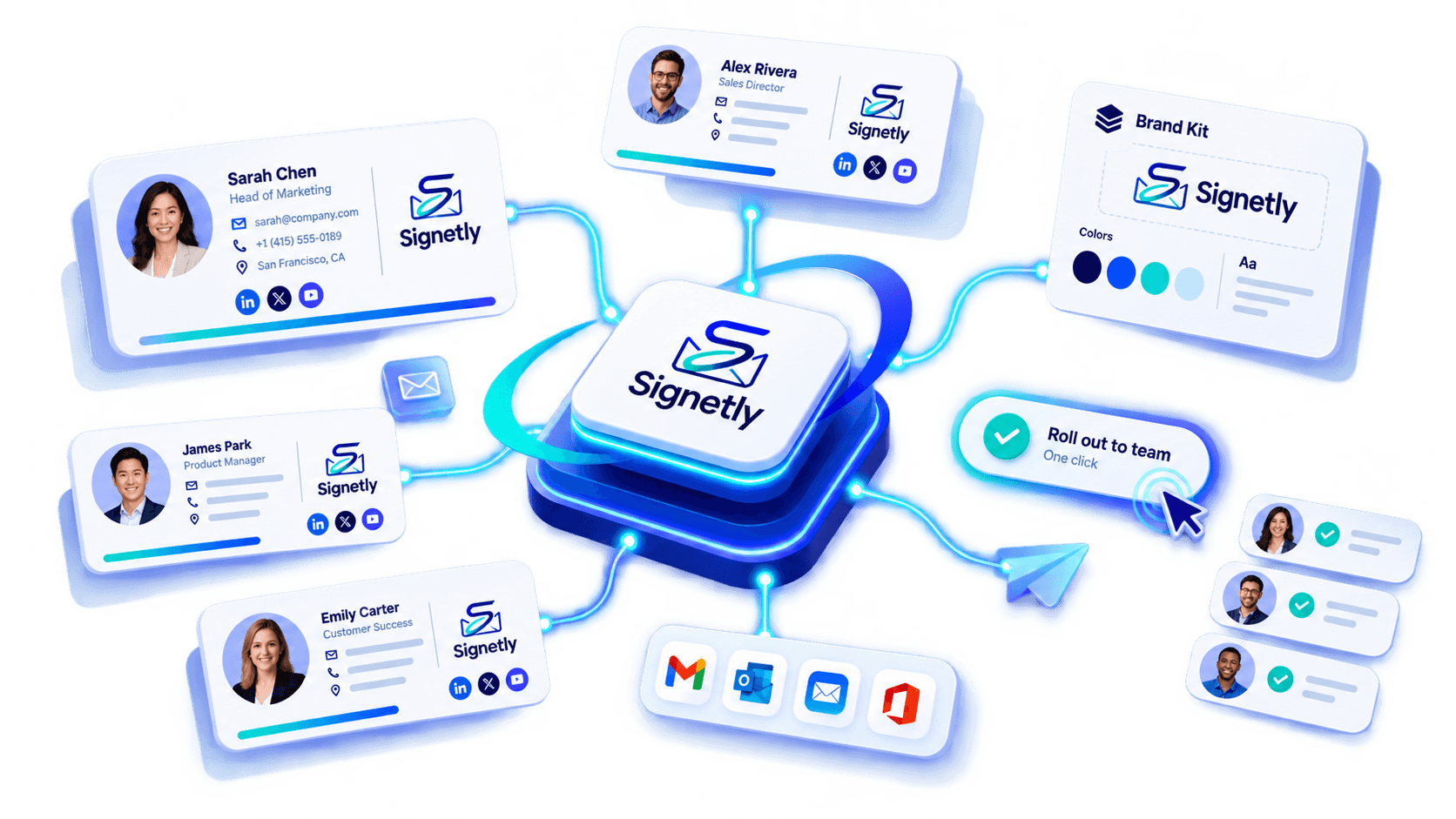
A signature that renders in Outlook, and a card somebody can scan across a table. Fill your details in once — your company's colours, logo and disclaimer arrive on their own, and the signature installs itself in every mailbox you own.
Verified in
Rolled out across
The problem
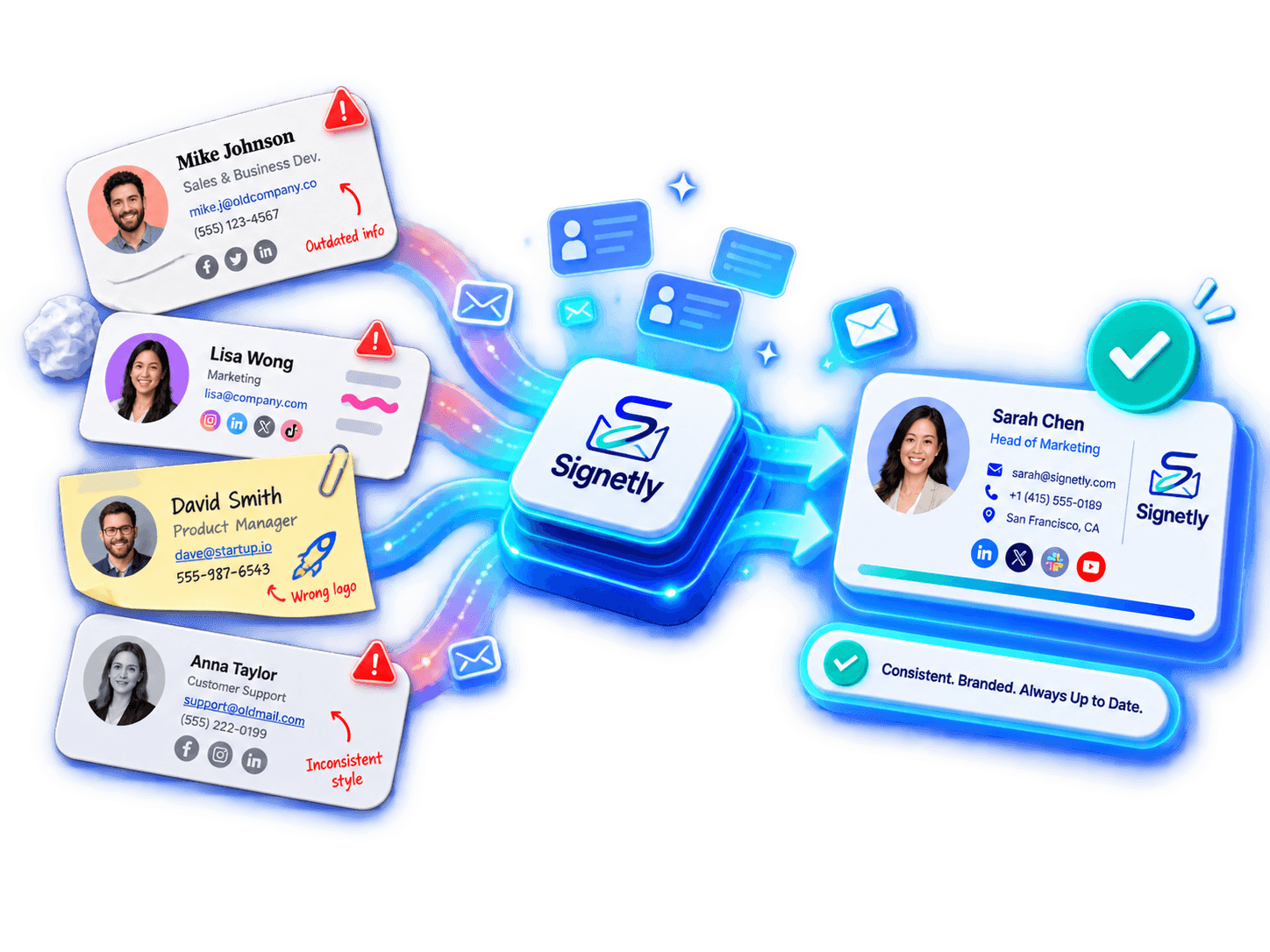
Nobody in the company is responsible for any of it. That is the starting state we replace — not an unfair caricature of it.
0%
of company signatures are out of date
A title change, a new logo, a moved office — nobody goes back and edits the HTML they pasted two years ago.
0.0 hrs
per person, per rebrand
Multiply by the headcount. That is the real invoice for a signature nobody owns.
0k
emails a 200-person company sends monthly
The most-viewed placement the company owns, and the only one nobody is measuring.
How it works
Logo, six colours, a font a mail client can honour, the address, and the disclaimer legal insists on. One kit, or one per region.
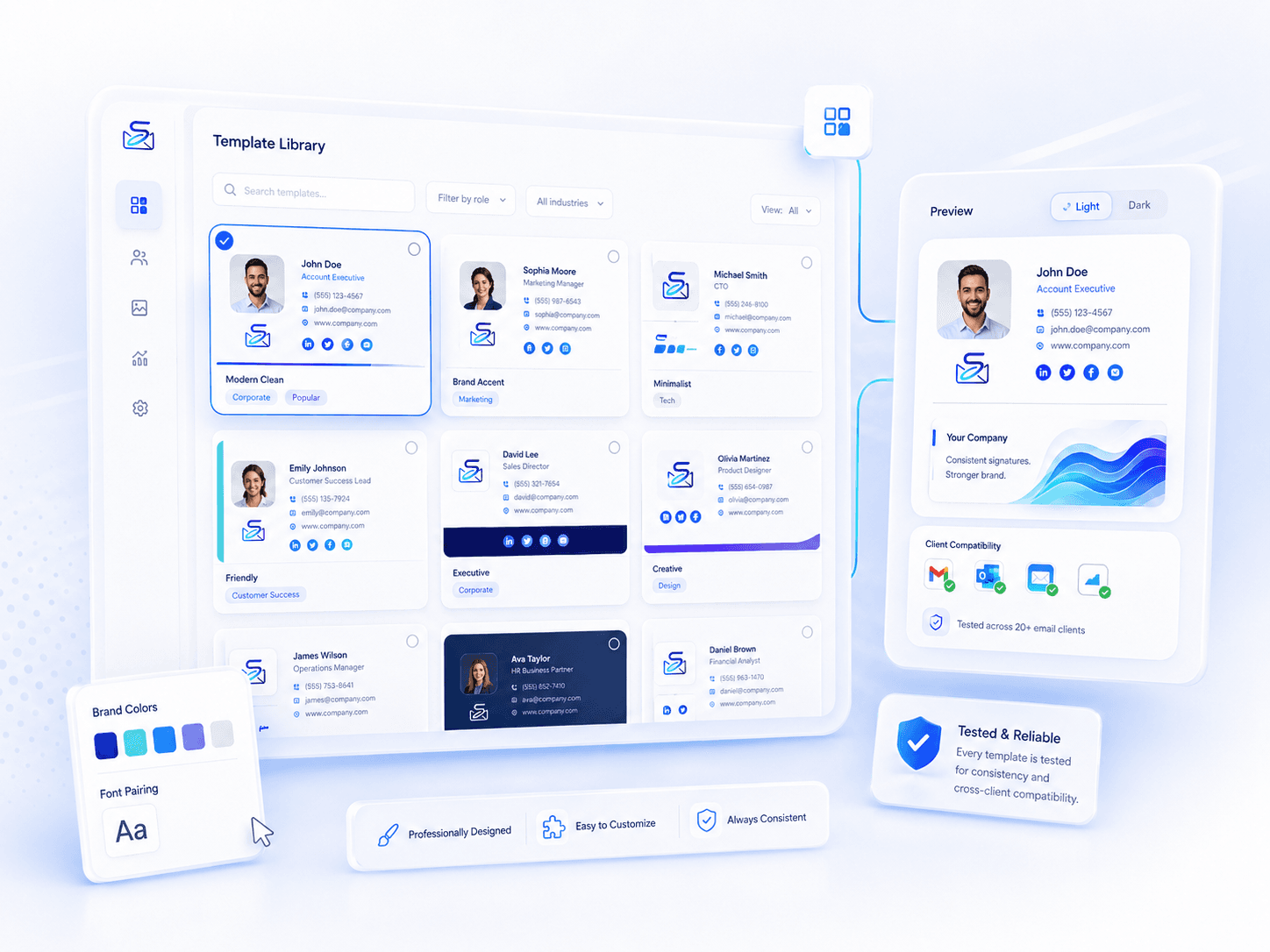
From a library where every template was rendered in eight clients and signed off before it shipped. Shortlist the ones your company may use.
Name, title, mobile. Everything else is locked to the brand kit, so a signature cannot go off-brand even by accident.
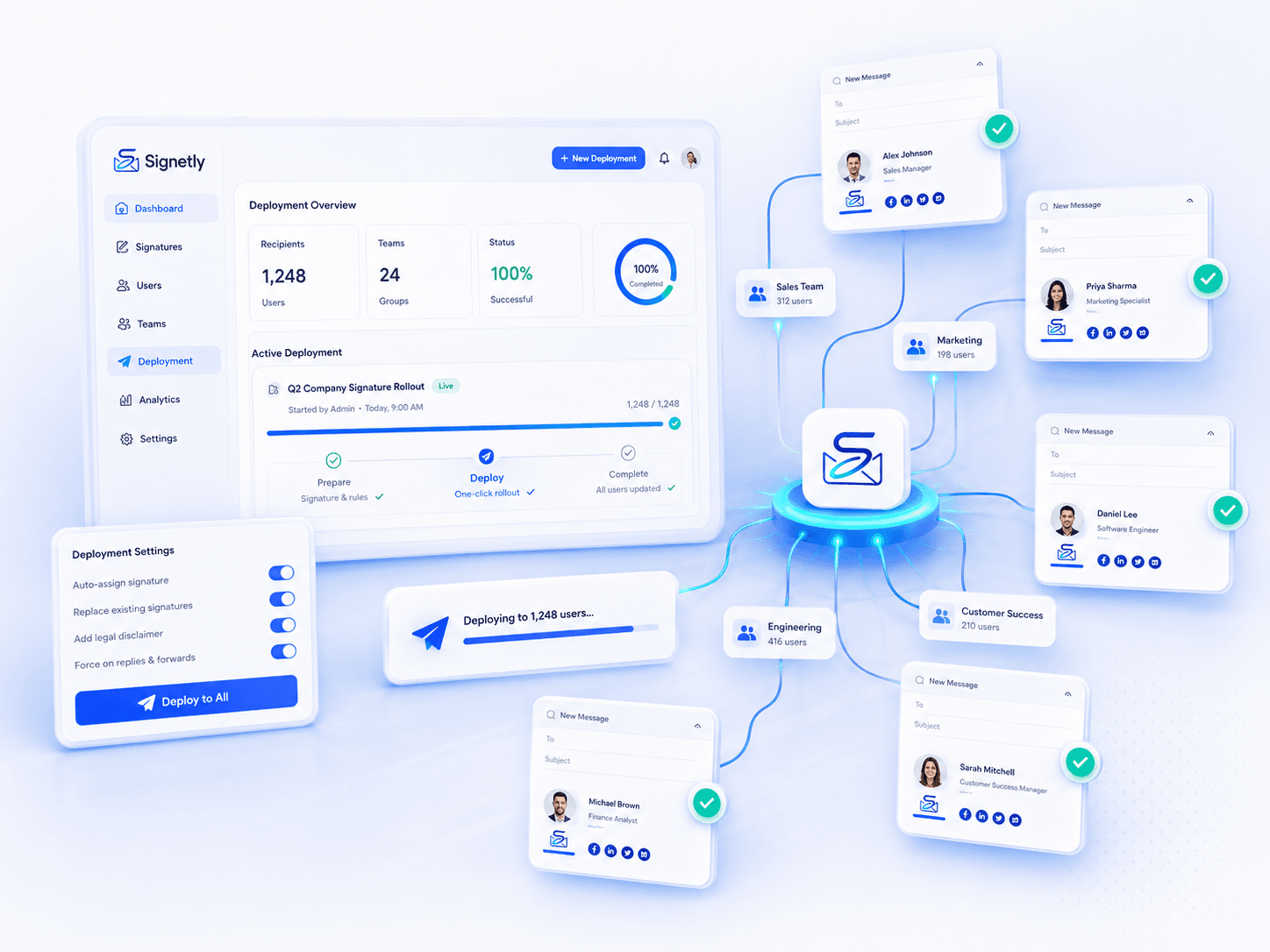
One admin consent, then every mailbox in Google Workspace or Microsoft 365 at once. Six failures out of four hundred are six retries, not a restart.
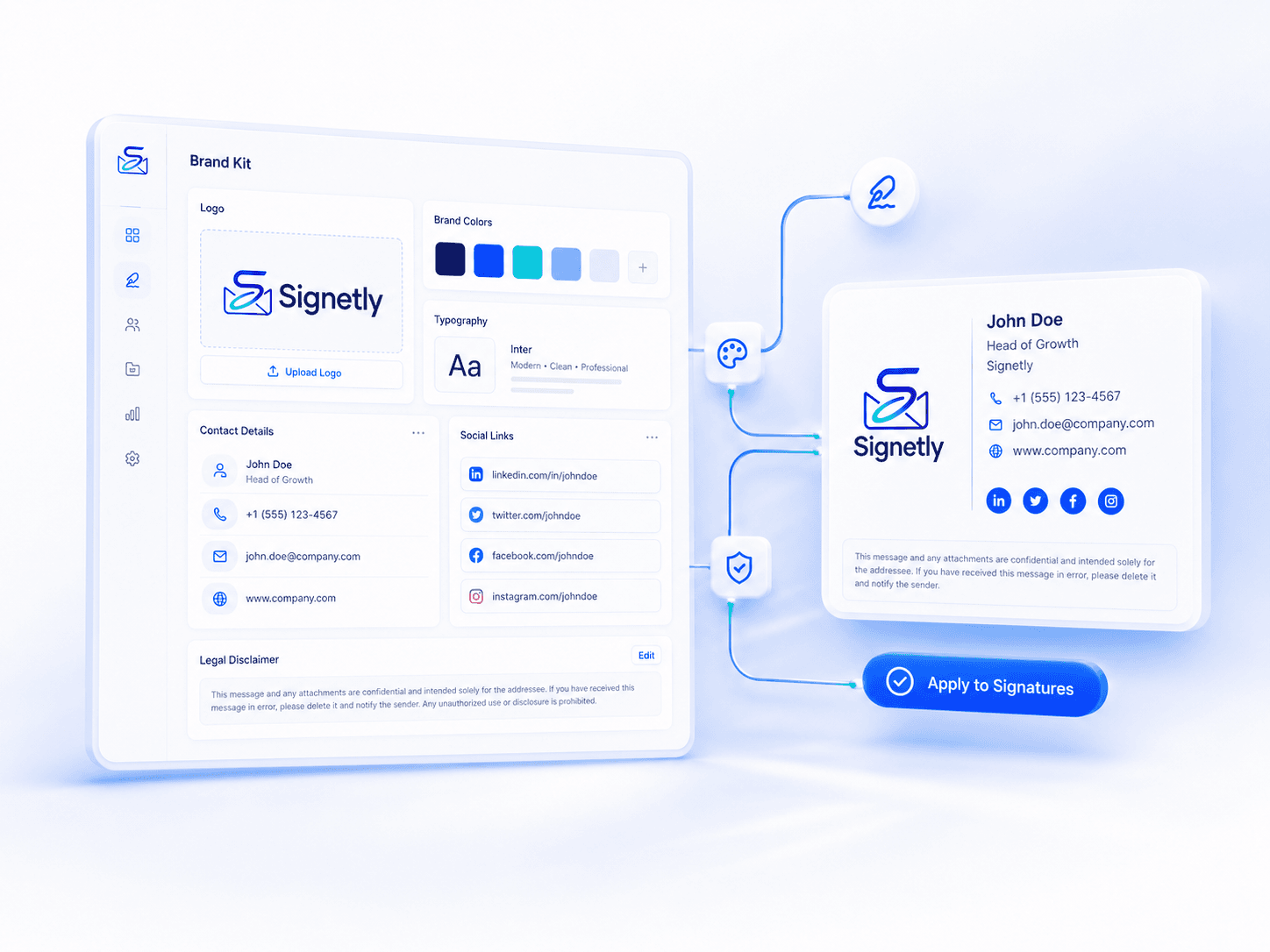
The library
A phone block knows it is a phone number, so it becomes a real tel: link in the brand's own colour. None of it is HTML somebody pasted and hoped about.
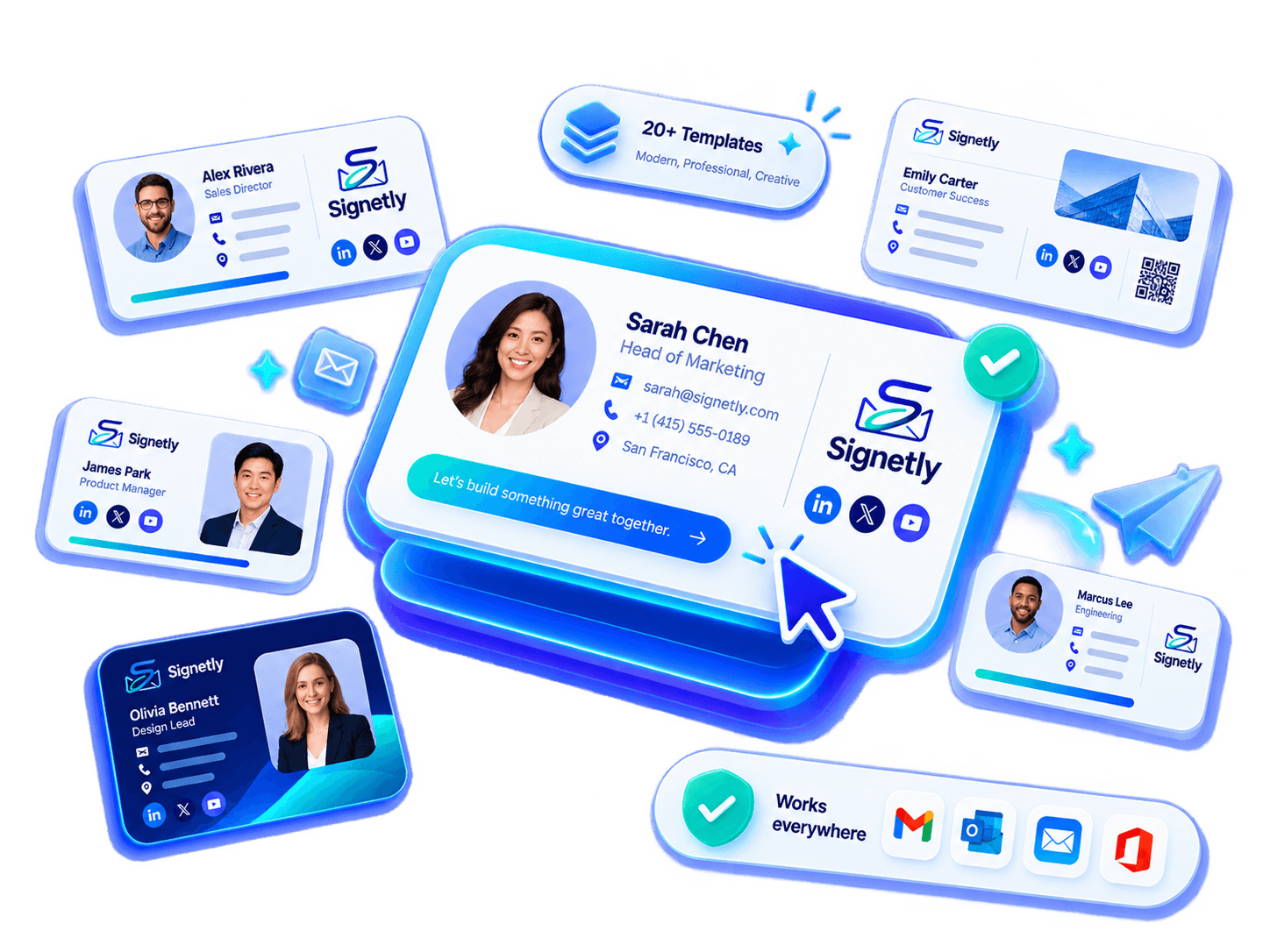
Cross-client rendering
Outlook on Windows draws email through Word, which supports no flexbox, no grid and no float. So every template here is tables with inline styles, capped at 600 pixels, with no web font anywhere — and then rendered in all eight clients before it is allowed into the library.
A template that fails one of them does not ship with a footnote. It does not ship.
The card
Your signature ends every email. A card is what somebody scans across a table — the same name, the same numbers, the same brand, on a page that keeps working after the meeting.
Every card has its own address and its own QR. Randomize the link and the old one stops resolving — it never quietly starts pointing at somebody else.
The button hands over a real contact file, so the details land in a phone spelled correctly. A picture of a card is a card nobody types in.
Opens, saves and taps, per card. There is no column for who did any of it, which is why nobody handing your card on has to think about it.
Integrations
Google Workspace and Microsoft 365 are connected with one consent from an administrator of your mail domain, and then every mailbox is one action. Each mailbox reports its own outcome, so six failures out of four hundred are six retries. The last two are still on the roadmap, and each card says which it is.
Business Gmail
Domain-wide delegation, granted once — not four hundred people clicking Allow. Reads your directory, then writes the signature into each mailbox.
Exchange Online
One admin-consented permission. Directory sync is fully supported; the signature write uses a preview Microsoft API, so a mailbox it refuses is reported with the reason rather than counted as done.
Maps and Search
Pull the verified address and hours into the brand kit, so the signature and the listing cannot disagree.
Shared hosting, Roundcube and Horde
For companies whose mail is on their own hosting rather than a suite.
Brand control
Logo, colours, typography, contact fields, social links, legal. The rows carrying them are not editable, so going off-brand is not a mistake somebody can make.
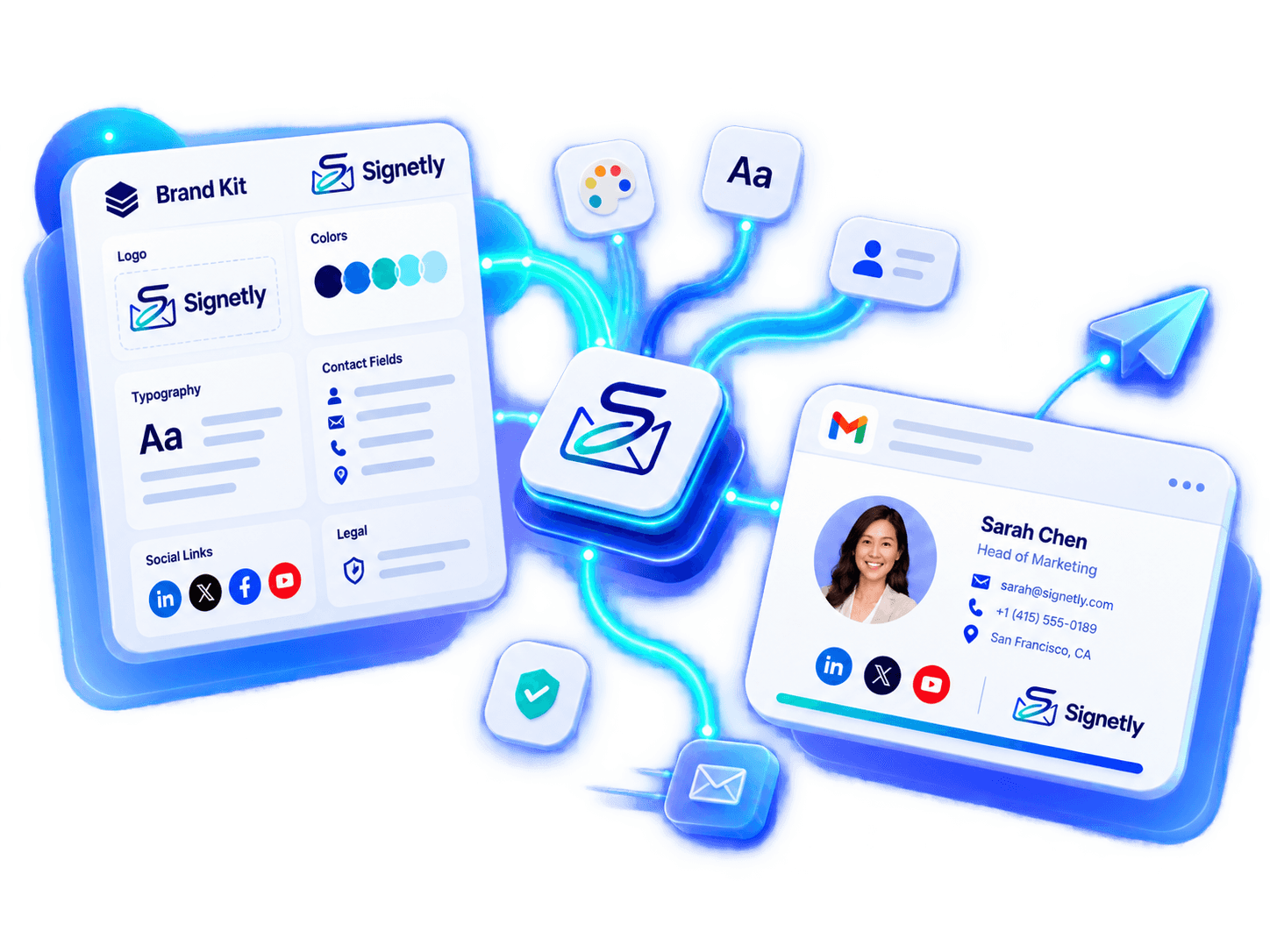
An admin decides which rows a person may edit. The logo, the colours and the disclaimer are not among them.
Sales gets the booking link, Legal gets the long disclaimer — from one shortlist and one brand kit, not two accounts.
A banner with a start and an end date. It appears on the Sunday and stops on the closing day, without anybody remembering.
Domain-wide delegation, granted once by IT — not clicked through by four hundred people.
The second person from acme.com lands in the existing organization, with its brand kit already applied.
Change the logo once and every signature is right at its next render.
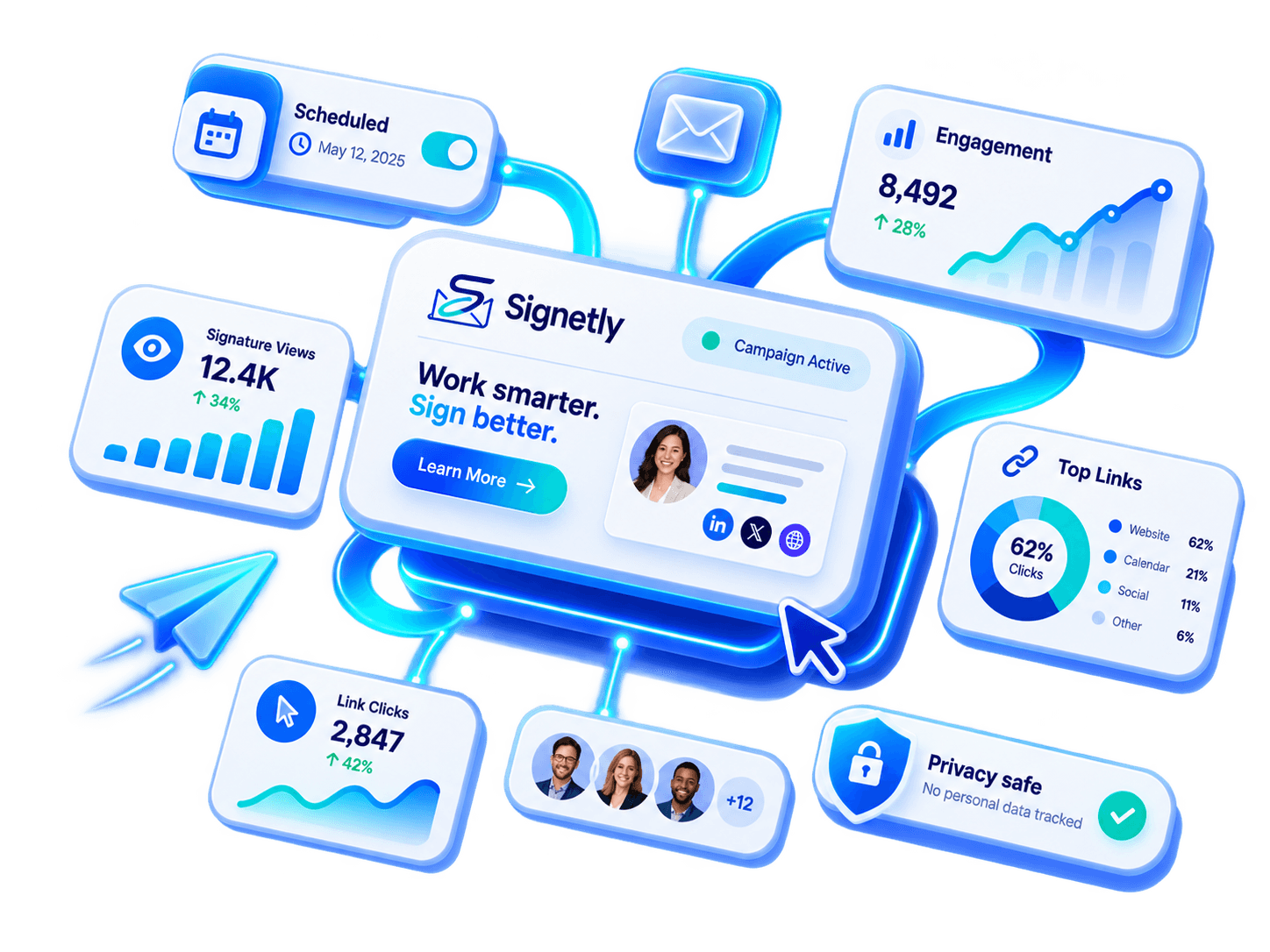
Measurement
Every link in a rendered signature goes through a redirect, so a click is counted at the moment it happens and then sent on. Split per element, because “is the banner working” is a different question from “is anyone calling us”.
We never store who clicked. There is no recipient address column and there will not be one — an admin needs the total, and keeping the person would make every customer's signature a tracker their own recipients never agreed to.
Pricing
$0one seat
For one person who wants their own signature to stop looking like 2011.
$4per seat / month
For a company that wants one signature, applied the same way to everyone.
$7per seat / month
For several brands, several regions, and a marketing team with a calendar.
SAML and SCIM, provisioning from your HRIS so a new hire has a signature before their first email, a signed DPA, and a rollout somebody from here runs with you.
Questions
That is the one thing we will not hedge on. Every template is tables with inline styles, capped at 600 pixels, no web font and no flexbox, and it is rendered in Outlook on Windows before it enters the library. A layout that fails there does not ship with a footnote — it does not ship.
No. We do not send, receive or read mail. We generate the signature and, if you want, install it into the mailboxes you already have in Google Workspace or Microsoft 365.
Nothing, until you choose it. A signature is pinned to the exact template version it was built from, so a revision we publish on Tuesday never silently rewrites what is already installed. You get an update prompt with a note saying what changed.
Yes — that is the point. An admin locks the blocks that carry the brand and leaves the rest open, so somebody changing their mobile number does not need a ticket, and somebody changing the logo cannot.
Opens and clicks, split by which element was clicked, aggregated per company. Not who clicked. There is no recipient address column in the schema, because your recipients did not agree to be in one.
Where it is read. A signature is email HTML that has to survive Word, so it is tables and inline styles and no web font; a card is a page in a browser, so it can have a photograph, four colours of your own and a Save contact button. Both are built from the same details, so a changed phone number fixes both at once.
It usually does, for a few — a suspended account, a shared alias, a revoked scope. Each mailbox gets its own outcome, so six failures out of four hundred are six retries rather than a run you start again.
Get started
Free for one person, fourteen days free for the company, and no migration at all — we generate the signature and install it into the mailboxes you already have.
…and 397 more, all rendering the same